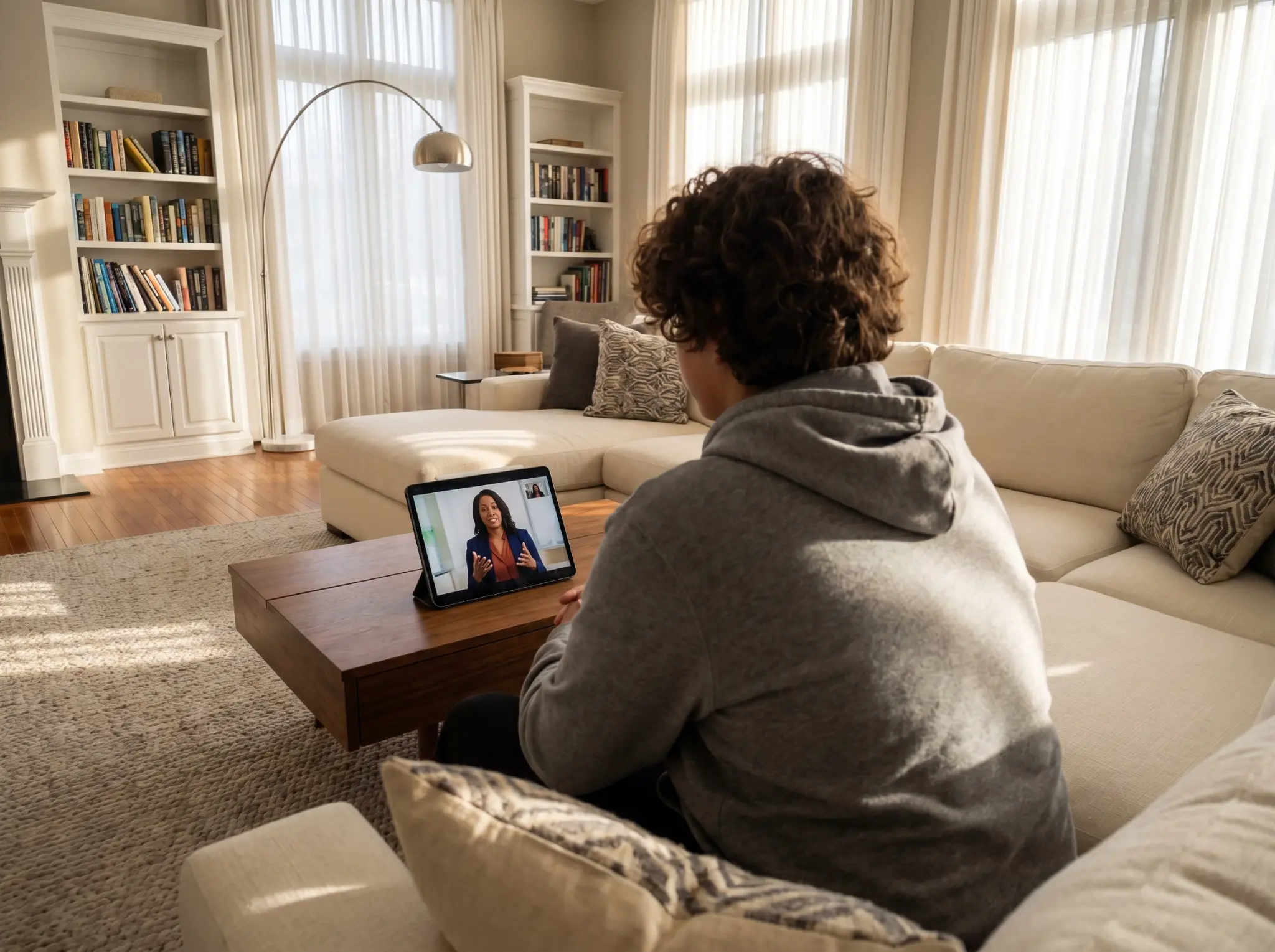
Getting a GLP-1 prescription has become easier than ever. Telehealth platforms can prescribe weight loss medications in a single visit. But for adolescents, a prescription without comprehensive support isn't just incomplete; it can be counterproductive.
Research shows that medication alone, without integrated lifestyle support, monitoring, and behavioral guidance, leads to significantly worse outcomes. Here's what the data tells us.
The risks of unsupervised treatment
Designed to preserve lean mass through high-protein nutrition guidance and structured activity.
Without pediatric-specific nutrition support, a significant portion of weight lost can come from lean muscle rather than fat, undermining long-term metabolic health.
Behavioral support builds lasting habits that outlast the medication.
Obesity is a chronic condition that often requires long-term management to sustain results. Without ongoing support, maintaining progress becomes significantly harder.
Gradual dosing and clinical monitoring keep side effects manageable.
Developing bodies respond differently to GLP-1 medications. Without careful clinical oversight, gastrointestinal side effects can be more pronounced in adolescents.
Sources: CDC National Center for Health Statistics (2023); New England Journal of Medicine, Semaglutide in Adolescents with Obesity (2023); Whitaker et al., NEJM (1997).
What "comprehensive care" actually means
The AAP's 2023 Clinical Practice Guidelines are clear: effective pediatric obesity treatment requires a multi-component approach. Medication is one tool within a larger system. Here's what that system includes:
Wondering if this applies to your child? The 2-minute eligibility check tells you if Thryvwell could be a fit. No commitment, no payment info.
The first 90 days: supervised vs. unsupervised
Here's what the first three months typically look like with and without comprehensive support:
With supervised care
Week 1-2: Baseline labs, growth assessment, nutrition plan established. Low starting dose.
Week 3-4: First check-in. Side effects assessed. Nutrition adequacy confirmed. Dose adjustment if needed.
Month 2: Behavioral support begins. Activity plan introduced. Family check-in. Dose titration continues.
Month 3: Progress review. Growth velocity checked. Labs repeated. Long-term plan refined.
Without supervised care
Week 1-2: Prescription filled. No baseline growth data. Standard adult titration schedule.
Week 3-4: Appetite drops significantly. No guidance on maintaining adequate nutrition. Teen may undereat.
Month 2: Weight loss occurring but composition unknown. No behavioral support. Old habits persist.
Month 3: No follow-up scheduled. Side effects unmonitored. Growth impact unknown.
Questions to ask any provider
If you're evaluating programs for your adolescent, these questions help distinguish comprehensive care from prescription-only services:
If a program can't answer these questions clearly, it may not be equipped to treat adolescents safely.
Sources
- AAP. Clinical Practice Guideline for the Evaluation and Treatment of Children and Adolescents With Obesity (2023)
- Weghuber, D. et al. "Once-Weekly Semaglutide in Adolescents with Obesity." NEJM (2022)
- CDC National Center for Health Statistics. Prevalence of Obesity Among Youth (2023)
- Whitaker, R.C. et al. "Predicting Obesity in Young Adulthood from Childhood and Parental Obesity." NEJM (1997)
Comprehensive care from day one
Every Thryvwell plan includes physician oversight, nutrition support, behavioral support, and family integration - not just a prescription.
The information on this page is for educational purposes only and does not constitute medical advice. Always consult with a qualified healthcare provider before starting any treatment for your child.